Products
- Anti-Obesity Compound Library
- GPCR/G Protein-Targeted Compounds
- Immunology/Inflammation-Targeted Compounds
- JAK/STAT-Targeted Compounds
- MAPK-Targeted Compounds
- Membrane Transporter/Ion Channel-Targeted Compounds
- Metabolism-Targeted Compounds
- NF-κB-Targeted Compounds
- Microbiology/Virology-Targeted Compounds
- Neuronal Signaling-Targeted Compounds
- PI3K/Akt/mTOR-Targeted Compounds
- Oxidation-reduction-Targeted Compounds
- Proteases/Proteasome-Targeted Compounds
- Stem Cells/Wnt-Targeted Compounds
- Tyrosine Kinase/Adaptors-Targeted Compounds
- Ubiquitin-Targeted Compounds
Online Inquiry
Mouse necdin ELISA kit
Cat. No.:
0126WXX-1064
Assay Type:
Quantitative ELISA
Target Species:
Mouse
Assay Target:
Necdin
Size:
Add to basket
Product Overview
Description:
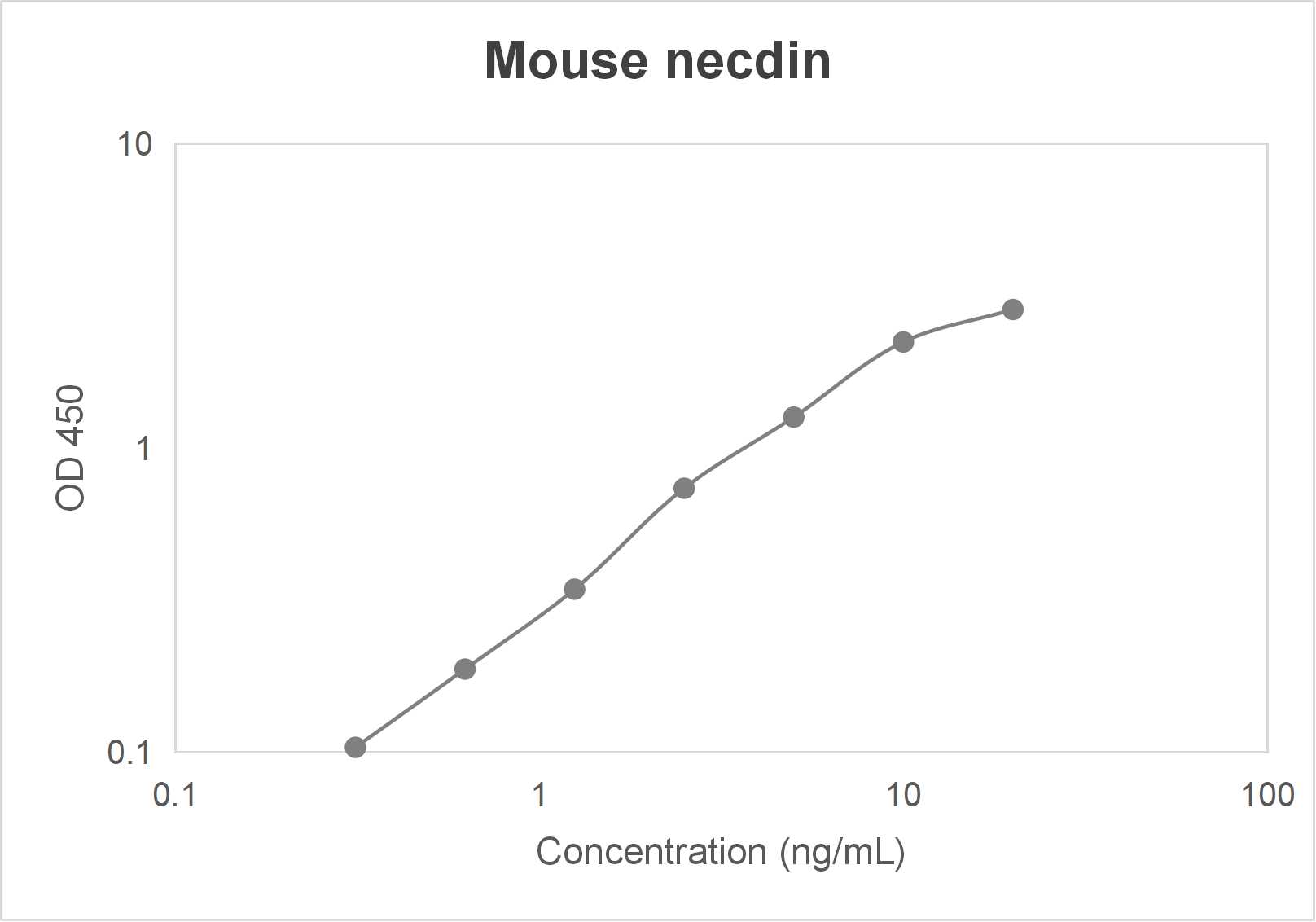
Mouse necdin ELISA kit is an ELISA-based in vitro research tool designed specifically for the quantitative detection of necdin in mice samples. The kit is highly sensitive and easy to use.
Assay Principle:
The ELISA analytical biochemical technique is based on necdin antibody-necdin antigen interactions (immunosorbency) and an HRP colorimetric detection system to detect necdin antigen targets in samples.
Background:
Necdin is a protein located within neuronal cell nuclei and is considered a transcriptional repressor. It belongs to the genes within the critical region of Prader-Willi syndrome (PWS). PWS is a genetic disorder characterized by severe morbid obesity and hyperphagia, primarily attributed to the deletion or dysfunction of genes within the PWS region (including Necdin). This suggests Necdin participates in the normal suppression of satiety and food intake within the hypothalamus.
Synonyms:
NDN
Applications:
Mouse necdin ELISA kit is used to quantify necdin in mouse samples, providing data to support research in a wide range of areas, including appetite regulation, signal transduction, obesity, etc.
Research Area:
Appetite regulation; Signal transduction; Obesity
Specification
Sample Type:
Mouse samples
Cross-reactivity:
No significant cross-reactivity or interference was observed.
Storage:
Store at -20°C.