Products
- Anti-Obesity Compound Library
- GPCR/G Protein-Targeted Compounds
- Immunology/Inflammation-Targeted Compounds
- JAK/STAT-Targeted Compounds
- MAPK-Targeted Compounds
- Membrane Transporter/Ion Channel-Targeted Compounds
- Metabolism-Targeted Compounds
- NF-κB-Targeted Compounds
- Microbiology/Virology-Targeted Compounds
- Neuronal Signaling-Targeted Compounds
- PI3K/Akt/mTOR-Targeted Compounds
- Oxidation-reduction-Targeted Compounds
- Proteases/Proteasome-Targeted Compounds
- Stem Cells/Wnt-Targeted Compounds
- Tyrosine Kinase/Adaptors-Targeted Compounds
- Ubiquitin-Targeted Compounds
Online Inquiry
Mouse insulin receptor substrate 1 (IRS-1) ELISA kit-Quantitative competitive
Cat. No.:
0126WXX-706
Assay Type:
Quantitative competitive ELISA
Target Species:
Mouse
Assay Target:
IRS-1
Size:
Add to basket
Product Overview
Description:
Mouse insulin receptor substrate 1 (IRS-1) ELISA kit-Quantitative competitive is an ELISA-based in vitro research tool designed specifically for the quantitative detection of IRS-1 in mice samples with a minimum detectable dose (sensitivity) of 0.1 ng/mL. The kit is highly sensitive and easy to use.
Assay Principle:
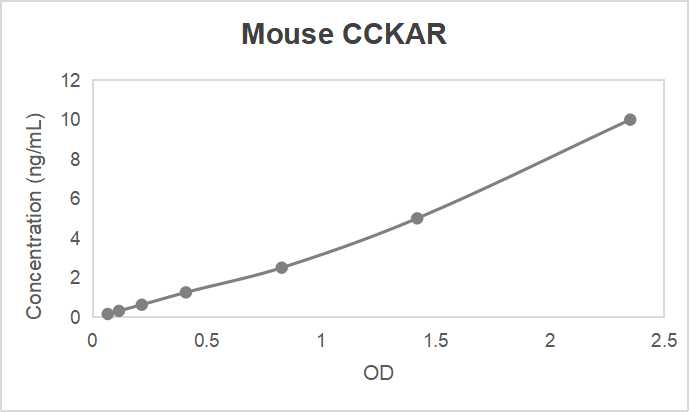
This IRS1 ELISA kit utilizes a competitive enzyme immunoassay format featuring a monoclonal anti-IRS1 antibody and an IRS1-HRP conjugate. Samples and assay buffers are incubated with the HRP-labeled conjugate in the pre-sensitized plate for sixty minutes. Because the binding sites on the monoclonal antibody are finite, the IRS1 in the sample competes with the conjugate for these sites. After five wash cycles, an HRP substrate is introduced, forming a blue product that turns yellow upon acidification. The signal intensity at 450 nm is inversely proportional to the IRS1 concentration. Final values are interpolated from a standard curve relating O.D. to the concentration of standards.
Background:
IRS-1 is a key adaptor protein that plays a central role in insulin signaling. When insulin binds to its receptor on the cell surface, the receptor is activated and phosphorylates tyrosine residues on IRS-1. This process transforms IRS-1 into a signaling “relay station,” enabling it to bind with multiple downstream signaling proteins such as phosphoinositide 3-kinase (PI3K). IRS-1 transmits insulin signals from the cell membrane into the cell interior, thereby initiating a series of vital biological responses, including promoting glucose transport and glycogen synthesis. Studying the function and defects of IRS-1 is crucial for understanding the pathological processes underlying obesity.
Synonyms:
IRS1
Applications:
Mouse insulin receptor substrate 1 (IRS-1) ELISA kit-Quantitative competitive is used to quantify IRS-1 in serum, plasma, cell culture supernatants, body fluid, tissue homogenate of mouse, providing data to support research in a wide range of areas, including endocrinology, obesity, etc.
Research Area:
Endocrinology; Obesity
Specification
Sample Type:
Serum; Plasma; Cell culture supernatants; Body fluid; Tissue homogenate
Sensitivity:
0.1 ng/mL
Cross-reactivity:
No significant cross-reactivity or interference was observed.
Storage:
Store at 2-8°C.