Products
- Anti-Obesity Compound Library
- GPCR/G Protein-Targeted Compounds
- Immunology/Inflammation-Targeted Compounds
- JAK/STAT-Targeted Compounds
- MAPK-Targeted Compounds
- Membrane Transporter/Ion Channel-Targeted Compounds
- Metabolism-Targeted Compounds
- NF-κB-Targeted Compounds
- Microbiology/Virology-Targeted Compounds
- Neuronal Signaling-Targeted Compounds
- PI3K/Akt/mTOR-Targeted Compounds
- Oxidation-reduction-Targeted Compounds
- Proteases/Proteasome-Targeted Compounds
- Stem Cells/Wnt-Targeted Compounds
- Tyrosine Kinase/Adaptors-Targeted Compounds
- Ubiquitin-Targeted Compounds
Online Inquiry
Mouse high density lipoprotein (HDL) ELISA kit-Quantitative sandwich
Cat. No.:
0126WXX-349
Assay Type:
Quantitative sandwich ELISA
Target Species:
Mouse
Assay Target:
HDL
Size:
Add to basket
Product Overview
Description:
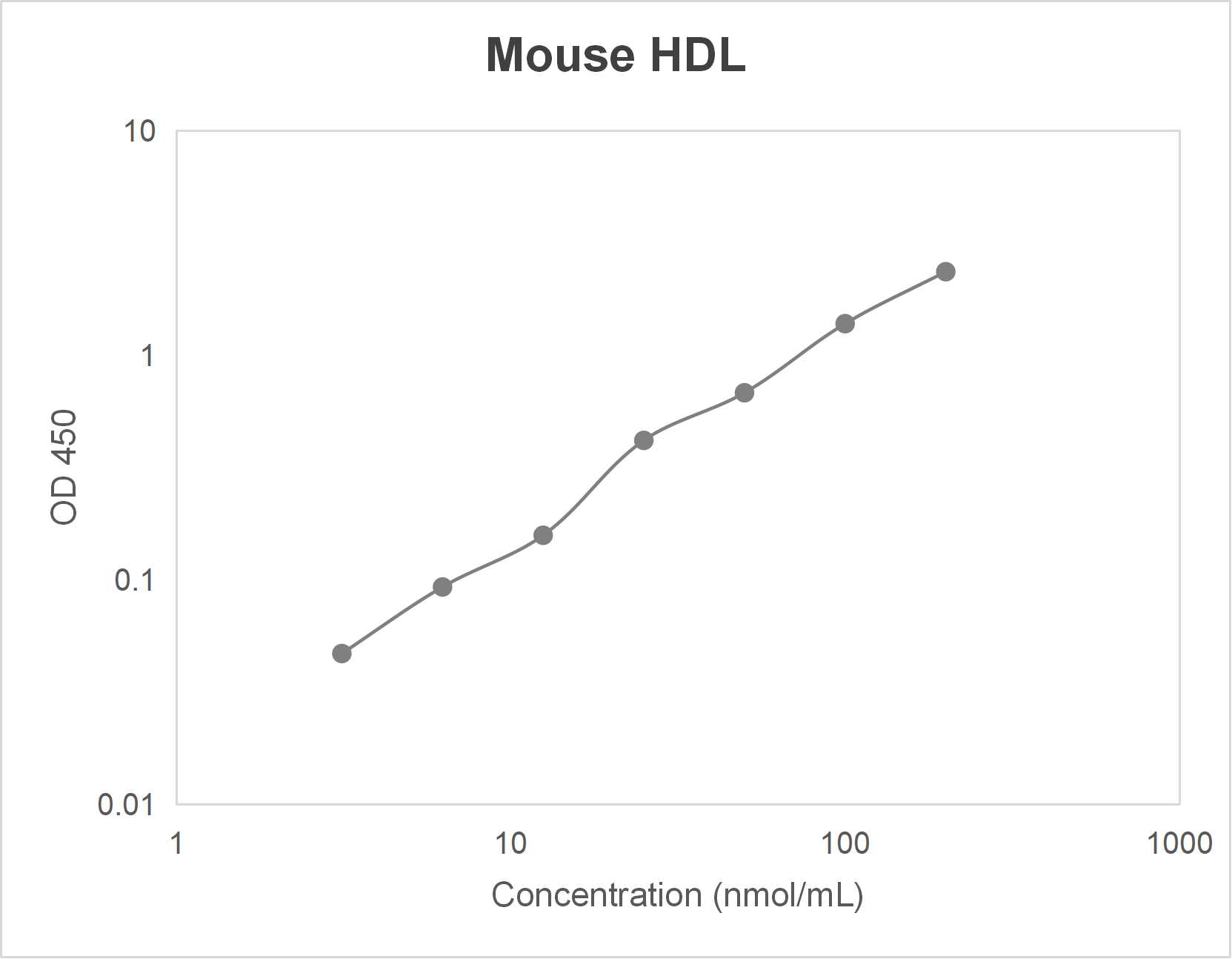
Mouse high density lipoprotein (HDL) ELISA kit is an ELISA-based in vitro research tool designed specifically for the quantitative detection of HDL in mice samples with a range of 3.125-200 nmol/mL and a minimum detectable dose (sensitivity) of 1.87nmol/mL. The kit is highly sensitive and easy to use.
Assay Principle:
This ELISA kit utilizes the sandwich-ELISA method for mouse HDL. The micro ELISA plate is pre-coated with a specific capture antibody. Standards or samples are added to the wells to bind with the immobilized antibody. Subsequently, a biotinylated detection antibody specific for mouse HDL and avidin-HRP conjugate are added successively. After washing away free components, a substrate solution is introduced, appearing blue and then turning yellow upon the addition of sulphuric acid. The OD is measured at 450 nm ± 2 nm, and the value is proportional to the concentration of mouse HDL.
Background:
HDL is a lipoprotein that transports cholesterol from body tissues—including arterial walls—back to the liver for processing or excretion. Due to its unique “reverse cholesterol transport” function, HDL is commonly referred to as “good cholesterol.” It helps clear excess cholesterol, preventing its accumulation on blood vessel walls and thereby reducing the risk of atherosclerosis and cardiovascular disease. A close and significant relationship exists between HDL levels and obesity. Obesity, particularly an increase in abdominal fat (visceral fat), is a primary cause of decreased HDL levels.
Synonyms:
HDL-C
Applications:
Mouse high density lipoprotein (HDL) ELISA kit is used to quantify HDL in serum, plasma, and biological fluids of mouse, providing data to support research in a wide range of areas, including metabolic pathway, endocrinology, cardiovascular biology, hepatology, nutrition metabolism, obesity, and others.
Research Area:
Metabolic pathway; Endocrinology; Cardiovascular biology; Hepatology; Nutrition metabolism; Obesity
Specification
Sample Type:
Serum; Plasma; Biological fluids
Detection Range:
3.125-200 nmol/mL
Sensitivity:
1.87nmol/mL
Cross-reactivity:
No significant cross-reactivity or interference was observed.
Recovery:
91-98%
Storage:
Store at 4°C.