Products
- Anti-Obesity Compound Library
- GPCR/G Protein-Targeted Compounds
- Immunology/Inflammation-Targeted Compounds
- JAK/STAT-Targeted Compounds
- MAPK-Targeted Compounds
- Membrane Transporter/Ion Channel-Targeted Compounds
- Metabolism-Targeted Compounds
- NF-κB-Targeted Compounds
- Microbiology/Virology-Targeted Compounds
- Neuronal Signaling-Targeted Compounds
- PI3K/Akt/mTOR-Targeted Compounds
- Oxidation-reduction-Targeted Compounds
- Proteases/Proteasome-Targeted Compounds
- Stem Cells/Wnt-Targeted Compounds
- Tyrosine Kinase/Adaptors-Targeted Compounds
- Ubiquitin-Targeted Compounds
Online Inquiry

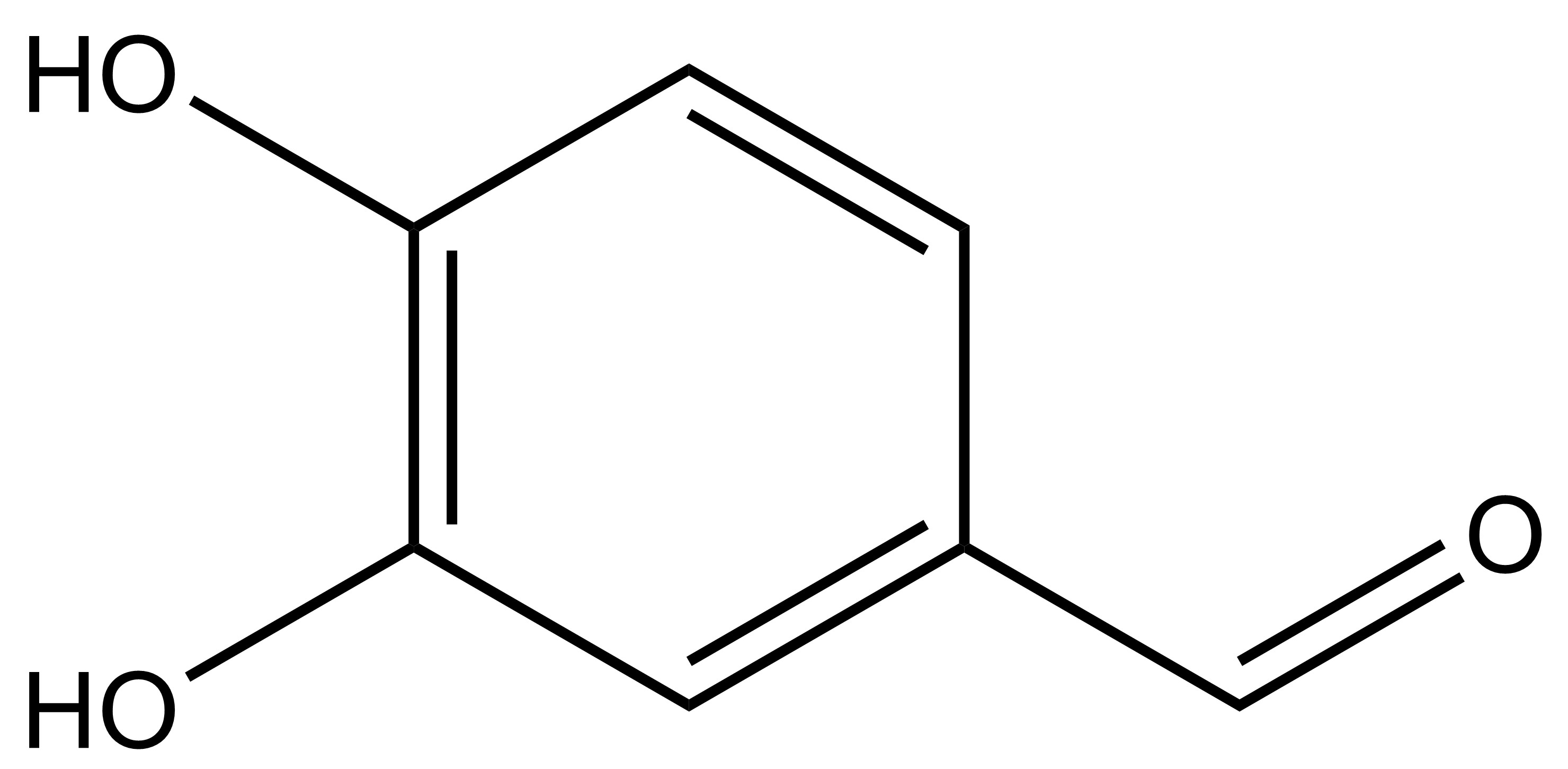
Protocatechualdehyde
Cat. No.:
0225LY-1301
Purity:
≥99%
Identity:
Confirmed by NMR, and HPLC.
Size:
Add to basket
Product Overview
Description:
Protocatechualdehyde is a naturally occurring polyphenol extracted from Salvia miltiorrhiza roots that is widely used in medicine as an anti-inflammatory, antibacterial, anti-aging, and antioxidant agent.
Synonym:
Protocatechuic aldehyde; 3,4-Dihydroxybenzaldehyde; Rancinamycin IV; Catechaldehyde; 139-85-5; 3,4-Dihydroxybenzaldehyde; Protocatechualdehyde; Rancinamycin IV; Benzaldehyde, 3,4-dihydroxy-; 4-Formyl-1,2-dihydroxybenzene; 3,4-Dihydroxybenzenecarbonal; 3,4-dihydroxy-benzaldehyde; 4-Formyl-1,2-benzenediol; 1,2-Dihydroxy-4-formylbenzene; protocatechuicaldehyde; 3,4-dihydroxy benzaldehyde; 3,4-Dihydroxybenzyl aldehyde
CAS No.:
139-85-5
Compound CID:
8768
Formula:
C7H6O3
Formula Weight:
138.12
Specification
Relative Density:
1.409 g/cm3
Stability:
3 years in powder form.
Storage:
Storage at -20°C.
Applications:
Protocatechualdehyde can be used in cardiovascular pharmacology to study its protective effects against oxidative stress-induced injury in vascular endothelial cells.
Library Information
Target:
Microbial growth inhibition
Pathways:
NF-κB signaling; Microbiology/Virology; Immunology/Inflammation; Metabolism
Plate Number:
AOCL-17
Plate Location:
f8
Empty Location:
a1-h1; a12-h12
Container:
96-well plate
Formulation:
10mM DMSO
DMSO Max Solubility:
250 mg/mL; 1810.02 mM