Products
- Anti-Obesity Compound Library
- GPCR/G Protein-Targeted Compounds
- Immunology/Inflammation-Targeted Compounds
- JAK/STAT-Targeted Compounds
- MAPK-Targeted Compounds
- Membrane Transporter/Ion Channel-Targeted Compounds
- Metabolism-Targeted Compounds
- NF-κB-Targeted Compounds
- Microbiology/Virology-Targeted Compounds
- Neuronal Signaling-Targeted Compounds
- Oxidation-reduction-Targeted Compounds
- PI3K/Akt/mTOR-Targeted Compounds
- Proteases/Proteasome-Targeted Compounds
- Stem Cells/Wnt-Targeted Compounds
- Tyrosine Kinase/Adaptors-Targeted Compounds
- Ubiquitin-Targeted Compounds
Online Inquiry

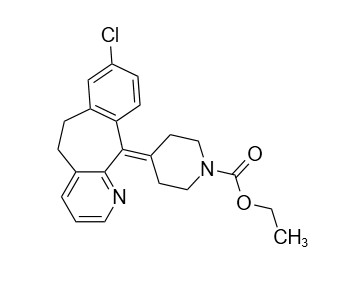
Loratadine
Cat. No.:
OB0225LY-0144
Appearance:
Solid
Purity:
≥99%
Identity:
Confirmed by NMR, HPLC, and LC-MS.
Size:
Product Overview
Description:
Loratadine is a second-generation antihistamine that selectively blocks H1 receptors and has fewer sedative side effects.
Synonym:
79794-75-5; Claritin; Alavert; Loratidine; Clarityn; Lisino; Clarityne; Ethyl 4-(8-chloro-5,6-dihydro-11H-benzo(5,6)cyclohepta(1,2-b)pyridin-11-ylidene)-1-piperidinecarboxylate
CAS No.:
79794-75-5
Compound CID:
3957
Formula:
C22H23ClN2O2
Formula Weight:
382.88
Specification
Relative Density:
1.261 g/cm3
Stability:
3 years in powder form.
Storage:
Storage at -20°C.
Applications:
Loratadine is mainly used to relieve allergic rhinitis and hives.
Library Information
Targets:
G protein-coupled receptors (GPCRs)
Receptors:
B(0)AT2; Histamine receptor
Pathways:
GPCR/G protein; Immunology/Inflammation; Neuronal signaling; Microbiology/Virology
Plate Number:
AOCL-2
Plate Location:
g7
Empty Location:
a1-h1; a12-h12
Container:
96-well plate
Formulation:
10 mM DMSO
DMSO Max Solubility:
50 mg/mL; 130.59 mM
Ethanol Max Solubility:
77 mg/mL; 201.1 mM